Last updated on October 18th, 2026 at 03:17 pm
If you received a message containing “YP” and wondered what it means, the answer depends on the surrounding conversation. In casual texting, YP can mean “Yes, Please!”, especially when someone is accepting an offer, invitation, or suggestion. Some people also use lowercase “yp” as a very short way of expressing agreement, similar to “yep” or “yes.”
Because YP is not a universally standardized texting abbreviation, context matters. The same two letters can occasionally have a different meaning, such as “Your Problem.”
This guide explains what YP means in text messages, how tone changes its interpretation, how it may appear on social media, and what you can naturally say in response.
Quick Answer
YP most commonly means “Yes, Please!” in texting. It is an informal abbreviation used to accept an offer or agree to a suggestion. Depending on context, lowercase “yp” may also function like “yep” or “yes.” Less commonly, YP can mean “Your Problem,” so the surrounding conversation is important.
What Does YP Mean in Text?
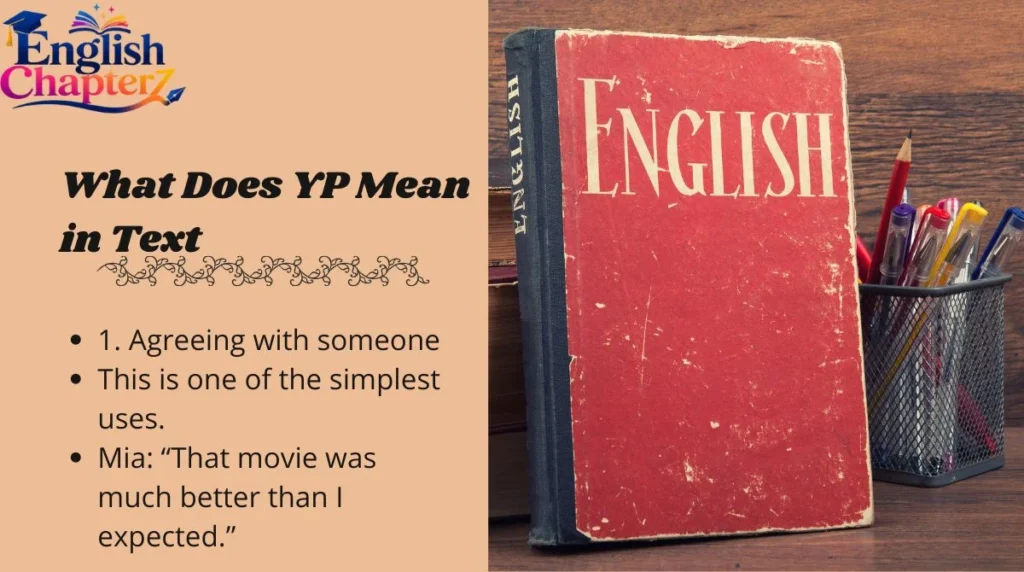
In text messaging, YP commonly stands for “Yes, Please!”
People may use it when someone offers something, asks whether they want something, or suggests an activity.
For example:
Friend: Want some pizza?
You: YP!
Here, YP means “Yes, please!”
It is short, informal, and usually positive. The person is accepting what was offered rather than simply acknowledging the message.
Full form of YP
The most established texting expansion is:
YP = Yes, Please!
It can communicate willingness, agreement, or acceptance without requiring a complete sentence.
However, not every person uses YP in exactly the same way. In some casual chats, “yp” can resemble “yep” or “yes,” particularly when it appears as a one-word response to a yes/no question.
How do you pronounce YP?
If someone reads the letters individually, they would normally say “why pee.”
But when YP represents “Yes, Please,” people generally understand the abbreviation rather than pronounce it as a separate spoken word.
What tone does YP have?
YP is generally casual, informal, and positive when it means “Yes, Please.”
Its exact emotional tone depends on punctuation and context:
- “YP!” can sound enthusiastic.
- “yp” can sound relaxed or brief.
- “yp 😊” can feel friendly.
- “yp lol” can sound playful.
- “yp…” may seem uncertain or reluctant depending on the conversation.
For that reason, you should not interpret the two letters alone. Look at the messages immediately before and after them.
What Should You Do If YP Is Confusing?
If you are unsure what someone means by YP, avoid guessing based only on the abbreviation.
First, check the message that came immediately before it and consider what question or offer the person was responding to. If someone asks, “Want some cake?” and replies “YP,” the intended meaning is easy to understand.
However, if YP appears in a conversation where “Yes, Please” does not make sense, another meaning may be possible.
You can simply ask, “YP as in yes, please?” This is a natural way to clarify the message without creating unnecessary confusion. Context is especially important because YP can have more than one interpretation.
Origin and Background
There is no well-established historical record showing that one particular person or platform created YP as a texting abbreviation.
Its use fits a broader pattern in online communication: people frequently shorten phrases to make casual messages faster and easier to type. Abbreviations such as “brb,” “idk,” and “tbh” developed within internet and messaging culture, while YP can similarly compress a short phrase into two letters.
Some slang references specifically document YP as “Yes, Please!” and also record “Your Problem” as another possible interpretation.
It is important not to assume that every appearance of YP has the same origin or meaning. “YP” is also used outside texting as an abbreviation for unrelated terms, including “young people,” “yield point,” and other expressions.
How YP Is Used in Text Conversations
The easiest way to understand YP is to look at the question or offer it answers.
1. Accepting an offer
Alex: Do you want some cake?
Sam: YP!
Here, YP clearly means “Yes, please!”
2. Agreeing to a suggestion
Mia: Should we watch a movie tonight?
Lena: yp
In this situation, the sender is probably agreeing to the suggestion.
3. Accepting an invitation
Jordan: Want to come with us tomorrow?
Taylor: YP 😊
The abbreviation communicates acceptance in a friendly, informal way.
4. Giving a quick yes
Friend: Are you still coming?
You: yp
Here, the meaning may be closer to “yes” or “yep” than a literal “yes, please.” Context determines the nuance.
5. Humorous use
Friend: Want to spend three hours doing homework?
You: YP 😂
The abbreviation itself is affirmative, while the emoji can make the response playful or ironic.
Does YP have a romantic meaning?
YP is not inherently romantic.
If someone you like sends “yp,” you should not automatically assume it is flirting. A message such as:
“Want to hang out after school?”
“yp :)”
could be friendly, enthusiastic, or simply affirmative. The relationship and the rest of the conversation matter much more than the abbreviation itself.
What Does YP Mean on Different Platforms?
YP generally keeps the same basic meaning across messaging and social platforms. The main difference is how informal the conversation is.
On WhatsApp, YP can be used in private chats or group conversations as a quick response to an offer or question.
“Want me to send you the notes?”
“yp, thanks!”
Because WhatsApp conversations are often informal, lowercase “yp” may simply look like normal casual typing.
Snapchat
On Snapchat, short replies are common because conversations can move quickly.
“Want to go?”
“yp!”
The meaning is generally understood from the preceding message rather than from the abbreviation itself.
In Instagram DMs, YP may appear when someone accepts an invitation, suggestion, or offer.
“Want the link?”
“YP”
It does not automatically carry a special Instagram-specific meaning.
TikTok
In TikTok comments or messages, abbreviations can be highly context-dependent. If YP appears as a reaction to an offer or question, “Yes, Please!” may fit. If it appears in a specialized community, however, it could refer to something unrelated.
On Facebook Messenger, YP can function like it does in ordinary texting: a short affirmative response.
Discord
Discord conversations can contain community-specific abbreviations, so context is especially important. If the conversation is simply about plans or an offer, “Yes, Please!” may make sense. In a specialized server, YP could have a community-specific meaning.
Dating apps
On a dating app, YP can still mean “Yes, Please!” or simply “yes.” It does not automatically indicate romantic interest beyond the specific question being answered.
For example:
“Would you like to keep chatting?”
“yp :)”
The message indicates agreement with continuing the conversation, but you should not read more into it without additional context.
What Does YP Mean From a Girl or Guy?
The sender’s gender does not change the basic meaning of YP.
If a girl sends “YP,” it can mean “Yes, Please!” just as it can when a guy sends it. Likewise, the abbreviation does not automatically reveal whether someone is interested in you romantically.
Instead, examine:
- What question was asked?
- Was an offer being made?
- Did they use punctuation?
- Did they add an emoji?
- What did they say before and afterward?
- Is the conversation friendly, serious, or joking?
- Is the person normally a very short texter?
Compare these:
“Want to come?”
“yp!”
This sounds enthusiastic.
But:
“Do you want to come?”
“yp.”
The period may make the answer feel more restrained or formal.
Neither version gives enough information by itself to determine romantic feelings.
Other Possible Meanings of YP
YP does not have one universal interpretation. The following are genuine possibilities, but they should only be used when the surrounding context supports them.
| Meaning | Context | Example |
|---|---|---|
| Yes, Please | Accepting an offer or request | “Want some?” — “YP!” |
| Yes / Yep | Very casual agreement | “You coming?” — “yp” |
| Your Problem | Dismissive or teasing context | “I forgot my homework.” — “YP.” |
| Young People | General writing or discussion rather than ordinary texting | “YP often use social media.” |
The safest approach is to treat “Yes, Please!” as a strong possibility when YP responds to an offer, while considering the rest of the conversation before deciding.
Some unrelated communities may also use YP as specialized shorthand. Those meanings should not be assumed in an ordinary text conversation.
How to Respond to YP
Your response should match what the other person appears to mean.
If YP means “Yes, Please!”
You can simply continue with the next step:
You: Want some popcorn?
Them: YP!
You: Sure, I’ll save you some.
If you want to keep it casual
“Haha, okay!”
If you want to confirm
“You mean yes?”
This works especially well if the original question was unclear.
If you’re joking
“That was a very enthusiastic YP 😂”
If you’re confused
“YP as in yes please?”
There is nothing wrong with asking for clarification when an abbreviation is ambiguous.
If the context seems dismissive
If YP appears to mean “Your Problem,” you might respond:
“Okay, I wasn’t asking you to fix it.”
Or, if you think they were joking:
“Lol, thanks for the support 😅”
The best response depends on the relationship and tone of the conversation.
Similar Texting Terms and Differences
| Term | Meaning | Key Difference |
|---|---|---|
| YP | Yes, Please | Short affirmative response, often to an offer |
| Yep | Yes | Casual agreement |
| Yup | Yes | Informal and conversational |
| Yes | Yes | Clearer and more neutral |
| Sure | Agreement or willingness | Can sound more relaxed and less directly affirmative |
“Yep” and “yup” are particularly close to lowercase “yp” when someone is simply answering a yes/no question. The difference is that YP is more explicitly associated with “Yes, Please!” in texting references, while “yep” and “yup” are ordinary informal forms of “yes.”
Can YP Sound Different Depending on the Message?
Yes, the tone of YP can change depending on the message it answers. When someone writes “YP!” after an offer, it usually sounds positive and enthusiastic, such as when accepting food, an invitation, or a suggestion.
A simple “yp” can feel more relaxed and may simply mean “yes” or “yep.” Punctuation and emojis can also influence how the reply feels.
For example, “yp 😊” may sound friendly, while “yp…” could suggest hesitation or uncertainty. The meaning is therefore not determined by the two letters alone. Looking at the complete exchange gives you a much better idea of what the sender intended.
Common Misunderstandings
Because YP consists of only two letters, it is easy to misunderstand.
Mistake 1: Assuming it always means “yes”
Sometimes YP is used as “Yes, Please,” while in another context it can have a different meaning. Read the message it is responding to.
Mistake 2: Assuming it is romantic
YP does not inherently mean flirting or romantic interest. A person can use it with friends, family members, classmates, or other casual contacts.
Mistake 3: Treating capitalization as a major difference
“YP” and “yp” generally do not have completely different meanings. Capitalization may reflect typing habits, emphasis, or the keyboard’s formatting rather than a secret message.
Mistake 4: Assuming every abbreviation is universal
Not everyone uses texting slang in the same way. Some people may never use YP, while others may use it regularly.
Mistake 5: Ignoring punctuation
Compare:
“yp!”
with:
“yp…”
The words are the same, but the punctuation can change the perceived attitude.
Is YP Appropriate or Safe to Use?
When YP means “Yes, Please!”, it is generally harmless and informal.
It works best in casual conversations with friends, classmates, family members, or people who are already comfortable with abbreviated texting.
It is not ideal for formal communication. For example, replying “YP” to a teacher, employer, or official email could seem unclear or overly casual. A complete response such as “Yes, please” is safer in professional or formal situations.
YP is not inherently offensive, threatening, or inappropriate. However, the alternative “Your Problem” can sound dismissive or rude if directed at someone seriously.
For example:
“I need help with this.”
“YP.”
If the sender genuinely means “Your Problem,” they may be brushing off the person’s concern. If the conversation is clearly joking, however, the same response could be playful.
When the meaning is uncertain, ask rather than assume.
Examples of YP in Text
Here are realistic examples showing different contexts and tones:
- Friend: “Want some fries?”
You: “YP 😂” - Friend: “Are you coming to the game?”
You: “yp!” - Sibling: “Want me to save you a slice?”
You: “YP, please!” - Classmate: “Should I send you the notes?”
You: “yp, that’d help a lot.” - Friend: “Movie tonight?”
You: “yp 🍿” - Friend: “You still want to go?”
You: “yp” - Friend: “Want to join us after school?”
You: “YP!” - Person: “Would you like another cookie?”
You: “yp lol” - Friend: “You want the blue one?”
You: “yp, definitely.” - Friend: “I forgot my charger.”
You: “YP.”
In this context, if the conversation supports it, YP could be intended as “Your Problem,” though clarification may be needed. - Friend: “Should I bring snacks?”
You: “yp 😂” - Friend: “Want me to send the picture again?”
You: “yp, thanks!”
Notice that the meaning becomes much easier to understand when you look at the message YP answers.
Frequently Asked Questions
What does YP stand for in texting?
YP commonly stands for “Yes, Please!” in texting. It can be used when someone accepts an offer, invitation, or suggestion. In very casual conversations, some people may also use “yp” as a shortened affirmative response similar to “yep” or “yes.”
Does YP mean yes or yes please?
It can mean either, depending on the sentence it responds to. When someone offers something, “Yes, Please!” is the clearest interpretation. When someone asks a simple yes-or-no question, lowercase “yp” may function more like “yes” or “yep.”
What does YP mean from a girl?
YP does not have a special meaning when sent by a girl. The abbreviation still depends on context. If she responds “YP!” to an offer, it can mean “Yes, Please!” Her gender does not turn the abbreviation into a romantic or secret signal.
What does YP mean from a guy?
A guy using YP can also mean “Yes, Please!” or a casual “yes.” The surrounding conversation determines the tone. You should not assume that YP indicates flirting, romantic interest, annoyance, or any other emotion without additional evidence from the conversation.
Can YP mean something rude?
Yes, although this is not the primary texting interpretation. Some references list “Your Problem” as another meaning of YP. In that context, it can sound dismissive or unfriendly.
Is YP appropriate for formal messages?
Usually, no. YP is best suited to informal conversations. In a school, workplace, customer-service, or other formal setting, writing “Yes, please” or “Yes” is clearer and more appropriate.
Conclusion
So, what does YP mean in text? In many casual conversations, YP means “Yes, Please!” and is used to accept an offer or agree to a suggestion. In very informal messages, it can also function like “yes” or “yep.”
Less commonly, it may mean something such as “Your Problem,” depending on context. The best way to interpret YP is to look at the question it answers, the punctuation, emojis, and overall tone. When the meaning is unclear, simply asking the sender what they meant is the most reliable approach.

Ethan Wordsmith is a passionate English language writer who enjoys exploring words, phrases, texting abbreviations, slang, and modern digital communication. Through clear and easy-to-understand content, he helps readers discover the meanings and everyday uses of English language terms.