Last updated on September 12th, 2026 at 03:00 pm
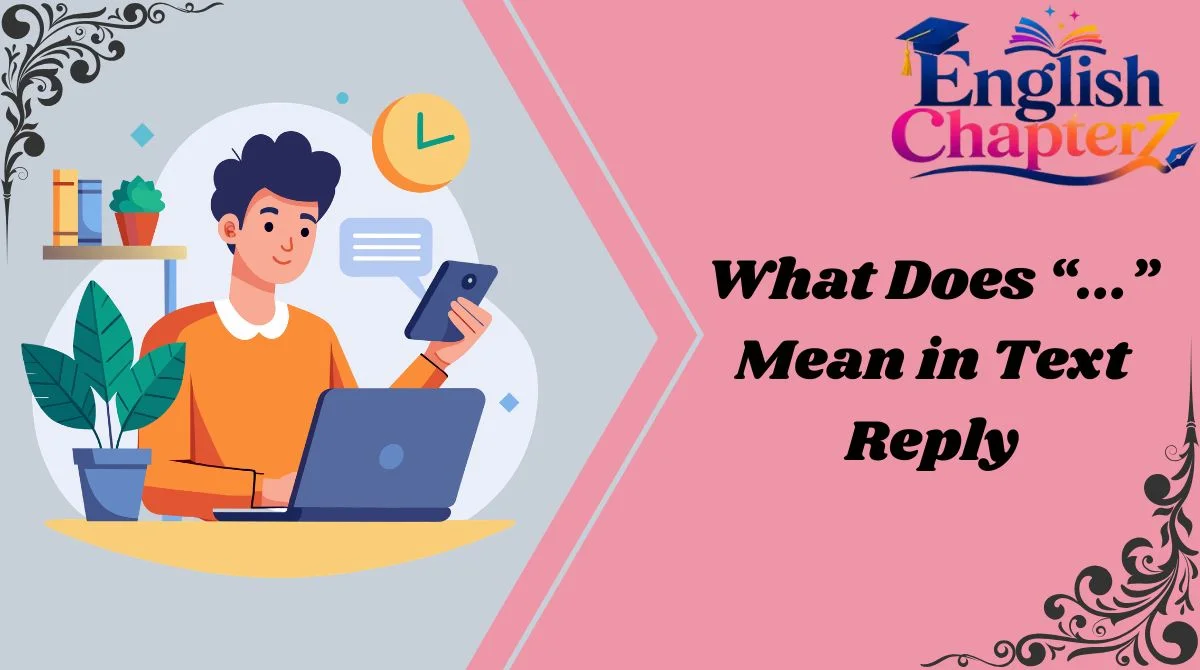
When someone replies to your message with “…”, it can leave you wondering what they actually mean.
Are they confused, annoyed, disappointed, speechless, or simply unsure how to respond? If you have searched what does ‘…’ mean in text reply, the answer is that three dots usually signal an unfinished thought, hesitation, silence, or an emotional pause. However, the exact meaning depends heavily on the conversation and the relationship between the people texting.
In some situations, “…” can feel completely neutral. In others, it may sound cold, awkward, passive-aggressive, or even judgmental. The best way to understand it is to look at what was said immediately before, the sender’s usual texting style, and whether they added emojis or other words.
Quick Answer
“…” in a text reply usually means hesitation, an unfinished thought, awkward silence, or that the sender does not know what to say. Depending on context, it can also suggest disappointment, annoyance, disbelief, or sarcasm. Unlike a single period, three dots often create a pause and leave the message emotionally open to interpretation.
What Does “…” Mean in Text?
The symbol “…” is called an ellipsis. It consists of three consecutive periods and is used in writing to indicate a pause, an incomplete thought, omitted words, or something left unsaid.
In texting, however, an ellipsis can carry an emotional meaning that goes beyond standard grammar. When someone sends only “…” as a reply, they may be communicating something like:
- “I don’t know what to say.”
- “I’m thinking about that.”
- “That was awkward.”
- “Really?”
- “I’m disappointed.”
- “There’s more I could say, but I won’t.”
- “I’m waiting for you to continue.”
- “I’m speechless.”
There is no single universal translation.
How Is “…” Pronounced?
The symbol is usually pronounced “ellipsis” when discussing the punctuation mark. In casual conversation, people may simply call it “three dots.”
For example:
You: “I accidentally sent the message to the wrong person.”
Friend: “…”
You: “Yeah, I know. I’m embarrassed too.”
Here, the three dots might express surprise, awkwardness, or the feeling that the friend does not know how to respond.
The Tone Behind “…”
The emotional tone can range from neutral to uncomfortable. It often depends on the message that came before it.
For example:
“I got you a surprise.”
“…”
This might suggest curiosity or confusion.
But:
“I thought you said you weren’t going to do that again.”
“…”
Here, the reply may indicate guilt, embarrassment, or that the person has no good answer.
Origin and Background of the Ellipsis
The ellipsis is not a new texting abbreviation. It is a traditional punctuation mark that has been used in written language to show omitted words, an unfinished statement, or a pause.
As digital communication developed, people began using punctuation more creatively in text messages, chats, forums, and social media. The ellipsis became useful for expressing pauses and emotions that are normally communicated through voice, facial expressions, or body language.
This is why “…” in texting can feel more emotionally loaded than it does in formal writing. In a face-to-face conversation, a pause can communicate hesitation or discomfort naturally. In a text message, three dots can serve as a written version of that pause.
The exact emotional meaning is not fixed, though. It depends on the sender and the situation.
How “…” Is Used in Text Conversations
People use three dots in several different ways. The most common interpretations include hesitation, an unfinished thought, awkwardness, and emotional silence.
1. To Show Hesitation
Someone may use “…” because they are unsure what to say.
Alex: “Did you actually enjoy the party?”
Sam: “…”
Alex: “Okay, I guess that’s a no.”
The sender may be hesitating because they do not want to give a direct answer.
2. To Show Awkward Silence
Sometimes “…” represents the feeling of sitting in silence after an unexpected message.
You: “I accidentally called my teacher ‘Mom’ today.”
Friend: “…”
You: “Please don’t judge me.”
Here, the dots can humorously represent an awkward pause.
3. To Express Disbelief
Three dots may communicate that someone is surprised or cannot believe what they have just read.
You: “He said he forgot my birthday again.”
Friend: “…”
You: “Exactly.”
The sender may be thinking, “I don’t even know what to say to that.”
4. To Show Disappointment
In a serious conversation, “…” may suggest that the sender feels disappointed.
You: “I know I promised, but I forgot.”
Them: “…”
You: “I’m really sorry.”
The silence may be more meaningful than a long response.
5. To Leave Something Unsaid
Sometimes the dots suggest that the sender has more thoughts but chooses not to express them directly.
You: “So you were talking about me behind my back?”
Them: “…”
You: “I guess that answers my question.”
This use can feel tense or confrontational.
6. To Be Funny
Friends sometimes use “…” as a humorous reaction.
You: “I think I can finish this entire pizza myself.”
Friend: “…”
You: “What? You don’t believe me?”
In this context, the dots can simply mean, “I’m not even going to respond to that.”
What Does “…” Mean on Different Platforms?
The basic meaning of three dots generally stays the same across messaging platforms. However, the surrounding culture and conversation style can influence how people interpret them.
On WhatsApp, “…” can indicate hesitation, awkwardness, or a pause. A short reply consisting only of three dots may feel more emotionally significant than using an ellipsis within a longer sentence.
Snapchat
Snapchat conversations are often casual and quick. On this platform, “…” might be used to react dramatically to a message, especially when friends are joking around.
In Instagram DMs, three dots can express confusion, disbelief, or a lack of words. The meaning usually depends on the previous message and the relationship between the users.
TikTok
In TikTok comments or direct messages, “…” may be used as a reaction to something surprising, strange, or awkward. It can sometimes communicate, “I’m speechless.”
On Facebook Messenger, the symbol can have the same range of meanings as in ordinary texting. Older or more formal texting habits may also make the punctuation seem more deliberate.
Discord
On Discord, “…” may be used during casual conversations, gaming chats, or group discussions to express confusion or humorous disbelief. The surrounding conversation usually provides the strongest clue.
Dating Apps
On dating apps, “…” can be more difficult to interpret because people may not know each other’s communication style yet. A message like “…” after a personal question might suggest hesitation or discomfort, but it could simply mean the person is unsure how to respond.
If the conversation is romantic, avoid assuming that the dots automatically indicate flirting or attraction. Context matters more than the punctuation itself.
What Does “…” Mean From a Girl or Guy?
The meaning of “…” does not inherently change based on whether the sender is a girl or a guy. There is no universal gender-specific meaning for three dots.
Instead, consider:
- What was said immediately before?
- Is the conversation serious or playful?
- Does the person normally use ellipses?
- Did they add an emoji?
- Are you close friends, dating, or strangers?
- Did the message contain something surprising or uncomfortable?
For example:
You: “I have something important to tell you.”
Them: “…”
This could mean they are nervous or waiting for you to continue.
On the other hand:
You: “I think pineapple belongs on pizza.”
Them: “…”
This could simply be a playful expression of disagreement.
The sender’s personality and usual texting habits are often more useful clues than their gender.
Other Possible Meanings of “…”
The most common meaning of “…” in a text reply is an emotional or conversational pause. However, several related interpretations are possible.
| Meaning | Context | Example |
|---|---|---|
| Hesitation | The person is unsure what to say | “…” after a difficult question |
| Awkward silence | The message creates an uncomfortable moment | “I forgot your name…” |
| Speechlessness | The person is surprised or shocked | “You did what…?” |
| Disappointment | The sender expected something different | “…” after an apology |
| Disbelief | The sender finds something hard to believe | “You really said that…” |
| Unfinished thought | The person intentionally leaves the sentence open | “I was going to tell you…” |
| Sarcasm | The dots emphasize an obvious or ridiculous situation | “Sure…” |
| Waiting | The sender may be expecting you to continue | “…” after you pause |
The most common texting interpretation is a pause or an indication that something is left unsaid.
How to Respond to “…”
If someone replies with only three dots, your best response depends on the situation. You do not necessarily need to panic or assume they are angry.
Casual Response
“What? 😂”
This works when the conversation is relaxed.
Funny Response
“Okay, I’ll take that as a dramatic pause.”
This can lighten an awkward moment between friends.
Friendly Response
“Haha, what are you thinking?”
This invites the person to explain themselves.
If You’re Confused
“I’m not sure what you mean by that. Everything okay?”
This is useful when the meaning genuinely isn’t clear.
If They Seem Upset
“Did I say something wrong?”
This gives them an opportunity to explain their reaction.
If You Think They’re Waiting
“Go on, I’m listening.”
This works when the dots seem to indicate that the person expects you to continue.
If the Conversation Is Serious
“I feel like there’s something you’re not saying. Do you want to talk about it?”
This is appropriate when the surrounding conversation suggests emotional tension.
Similar Texting Terms and Differences
“…” is not an abbreviation, but several other expressions can communicate a similar feeling.
| Term | Meaning | Key Difference |
|---|---|---|
| “…” | Pause, hesitation, or something left unsaid | More ambiguous and emotionally open |
| “Hmm…” | Thinking or uncertainty | More clearly suggests thought or consideration |
| “Umm…” | Hesitation or uncertainty | Usually sounds more conversational |
| “Uh…” | Difficulty responding or uncertainty | Often signals immediate hesitation |
| “…” + “okay” | Possible discomfort or disbelief | The added word gives more context |
The important difference is that “…” alone provides very little information. Expressions such as “hmm” or “umm” often give a stronger clue about what the person is feeling.
Common Misunderstandings
Three dots are easy to misinterpret because they do not have one fixed emotional meaning.
Mistake 1: Assuming the Person Is Angry
A reply of “…” does not automatically mean anger. The person might be surprised, confused, busy, or simply unsure what to say.
Mistake 2: Assuming It Is Romantic
Three dots are not automatically flirtatious. In a romantic conversation, they might create suspense or suggest hesitation, but they can also indicate discomfort.
Mistake 3: Ignoring the Sender’s Usual Style
Some people use ellipses frequently in everyday messages. For them, “…” may have little emotional significance.
Mistake 4: Treating Every Ellipsis as Passive-Aggressive
An ellipsis can sometimes sound passive-aggressive, especially in a tense conversation:
“Fine…”
However, “…” by itself is not necessarily passive-aggressive.
Mistake 5: Confusing an Ellipsis With a Typing Indicator
Some messaging apps display moving dots when someone is typing. This is different from a person intentionally sending “…” as a message.
Spelling and Formatting Differences
You may see:
...….......
The standard ellipsis contains three dots, although people often use different numbers casually in digital communication. Extra dots can add dramatic emphasis but do not have a universal meaning.
Is “…” Appropriate or Safe to Use?
Yes. An ellipsis is generally safe and appropriate to use in everyday texting. It is not offensive or inherently inappropriate.
However, it can be ambiguous. In professional communication, excessive use of “…” may make a message seem uncertain, vague, or emotionally loaded.
For example:
“I’ll check on that…”
A coworker might wonder whether you are uncertain or reluctant.
A clearer alternative could be:
“I’ll check on that and get back to you.”
In a workplace setting, use the ellipsis carefully when clarity matters.
The symbol itself does not indicate self-harm, abuse, sexual content, or another serious concern. However, if someone uses “…” during a conversation about a serious personal issue and then stops responding, the overall context matters. If you are genuinely concerned about someone, checking in directly and kindly is usually better than trying to decode the punctuation alone.
Examples of “…” in Text
Here are realistic examples showing how the meaning can change depending on context.
1. Hesitation
A: “Did you tell her what I said?”
B: “…”
A: “You did, didn’t you?”
2. Disbelief
A: “He bought another car.”
B: “…”
A: “I know. That’s his fourth one.”
3. Awkwardness
A: “I just waved back at someone who wasn’t waving at me.”
B: “…”
A: “Please don’t laugh.”
4. Disappointment
A: “You forgot our plans again.”
B: “…”
A: “That’s what I thought.”
5. Humor
A: “I’m going to become famous tomorrow.”
B: “…”
A: “Wow, thanks for the support.”
6. An Unfinished Thought
A: “I was going to tell you something, but…”
B: “But what?”
7. Confusion
A: “I don’t understand what just happened.”
B: “…”
A: “Okay, so we’re both confused.”
8. Possible Sarcasm
A: “I definitely didn’t eat the last cookie.”
B: “…”
A: “Why are you looking at me like that?”
9. Waiting for More
A: “So, I have some news…”
B: “…”
A: “Are you going to ask what it is?”
10. Emotional Pause
A: “I really thought you would understand.”
B: “…”
A: “Never mind.”
11. Friendly Reaction
A: “Guess who I saw today?”
B: “…”
A: “My favorite celebrity!”
12. Unclear Meaning
A: “I finally finished the project.”
B: “…”
A: “Is that a good reaction or a bad one?”
Frequently Asked Questions
What does “…” mean from a girl in a text?
It does not have a special meaning simply because a girl sent it. She might be hesitating, surprised, disappointed, confused, or unsure how to respond. Look at the message before the dots and her usual texting style. Relationship context and tone are much more important than gender.
Does “…” mean someone is mad?
Not necessarily. Three dots can suggest annoyance or disappointment in some conversations, but they can also indicate confusion, awkwardness, surprise, or speechlessness. If you think the person is upset, consider the whole conversation rather than assuming their emotion from the punctuation alone.
What does “…” mean from a guy in a text?
A guy using “…” may be expressing hesitation, disbelief, awkwardness, or that he does not know what to say. It can occasionally sound sarcastic or annoyed, but there is no universal male-specific meaning. His normal texting habits and the conversation’s context provide better clues.
Is “…” a bad response?
It can be, but not always. A reply containing only “…” may feel cold or confusing because it gives the other person little information. In a serious conversation, it might signal discomfort or disappointment. Between friends, however, it can simply be a funny or dramatic reaction.
Does “…” mean the person likes you?
Not by itself. Three dots are not a reliable sign of romantic interest. They may create suspense in a flirtatious conversation, but the same punctuation can also express uncertainty, awkwardness, or disbelief. Look for broader communication patterns rather than interpreting one punctuation mark as proof of attraction.
What should I reply when someone texts “…” ?
Your response should match the context. You could say “What?”, “Everything okay?”, “Haha, what are you thinking?”, or “I’m listening.” If the conversation is serious, ask directly whether something is wrong instead of guessing what the dots mean.
Conclusion
So, what does ‘…’ mean in text reply? Most often, it represents a pause, hesitation, awkward silence, or something the sender has left unsaid.
It can also communicate disbelief, disappointment, confusion, or sarcasm depending on the situation. The meaning does not automatically change based on whether the sender is a girl or guy, nor does it have a special meaning on one particular messaging platform.
To understand the message accurately, consider the conversation, relationship, punctuation, emojis, and the sender’s usual communication style.

Ethan Wordsmith is a passionate English language writer who enjoys exploring words, phrases, texting abbreviations, slang, and modern digital communication. Through clear and easy-to-understand content, he helps readers discover the meanings and everyday uses of English language terms.